Work is boring. There, I said it. It is not the kind of sentence that belongs in a company presentation, but it is true often enough. We are encouraged to describe our jobs as meaningful, challenging, and full of opportunities. We are expected to be grateful for the work we have, then sound excited about whatever lands in our inbox. But sometimes a job is simply boring.
Not terrible. Not unbearable. Not the kind of job that makes you cry in the bathroom every afternoon. Just boring in the quiet, repetitive way that makes you look at the clock and wonder how only 10 minutes have passed. I have had plenty of days like that, and I am starting to think they are not automatically a problem.
The fantasy of interesting work
Somewhere along the way, we started believing that work should be interesting all the time. Job descriptions promise a fast-moving team. Managers talk about passion and innovation. Career advice tells us to find work that feels like a calling. After hearing this often enough, an ordinary job starts to look like a personal failure.
Maybe you are in the wrong industry. Maybe you have stopped learning. Sometimes boredom is a useful warning. But sometimes the job is boring because work contains boring things. Reports have to be completed. Emails have to be answered. Meetings have to be attended. The same problems return every week wearing slightly different clothes. No amount of passion can make every task interesting.
The quiet repetition of a working life
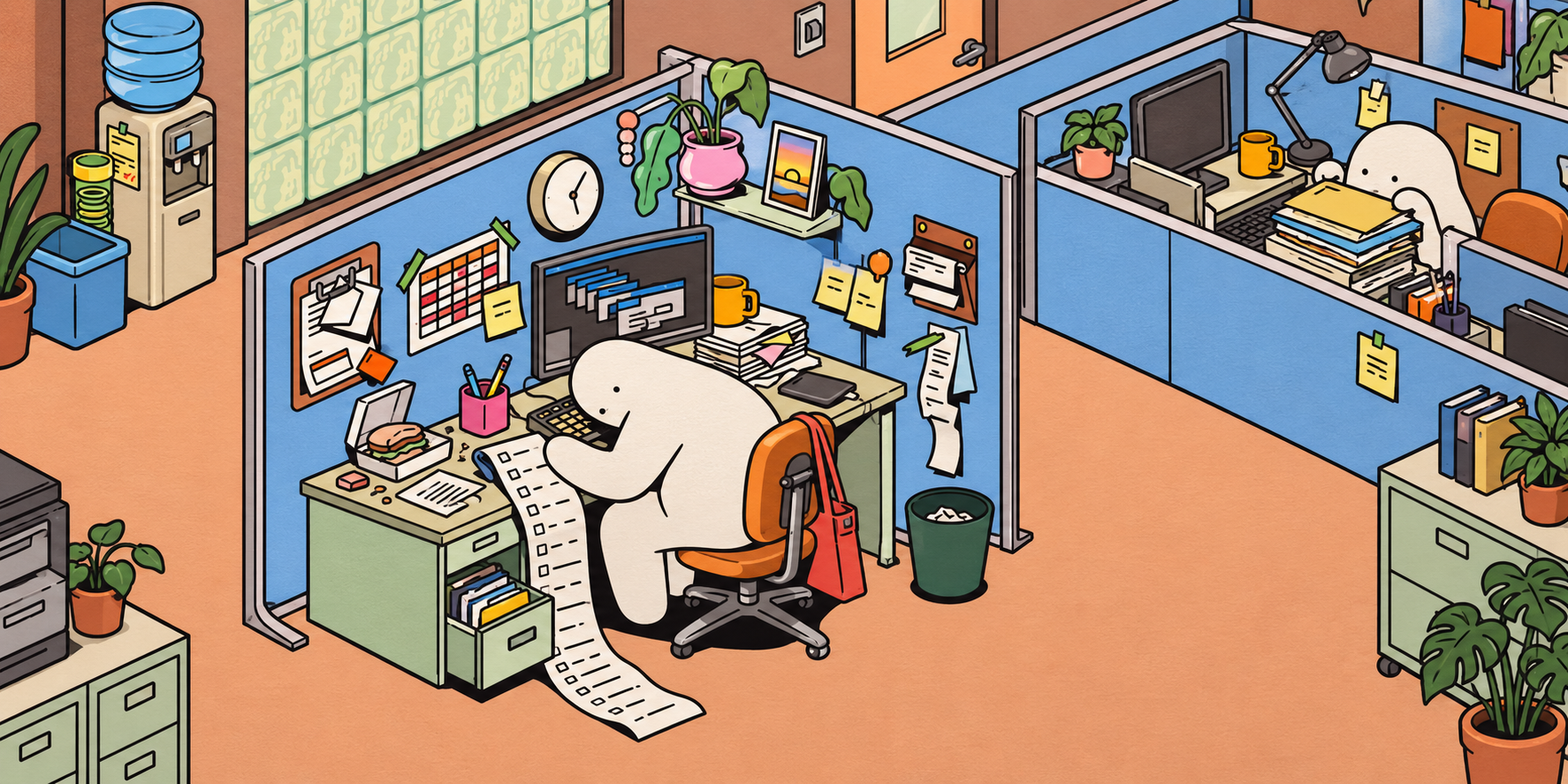
There are days when I spend eight hours at work and cannot remember a single thing I did. Nothing went badly. Nothing went especially well either. I answered messages, checked documents, waited for someone else's decision, and repeated the same process I had repeated the day before.
By the time I got home, I had worked all day without feeling that I had gone anywhere. I used to think those days were wasted. Now I am not so sure. Not every day has to move my life forward in a visible way. Some days only need to keep my life from falling backward.
Most work is not made of dramatic breakthroughs. It is made of small actions repeated until they become invisible. Checking the numbers. Reviewing the details. Following up with someone who has not replied. Fixing a mistake before it becomes a bigger mistake. Doing something correctly even though nobody will notice.
There is no applause for preventing a problem. If you do your work well, the crisis never happens. The machine keeps running. The customer never knows there was a risk. The report is submitted on time. The day ends without anything memorable taking place. The achievement is not always visible. Sometimes it is simply keeping things under control.
Boredom is not always emptiness
There is a difference between being bored and being empty. Boredom means the task does not demand much from you at that moment. Emptiness means you no longer feel connected to anything you are doing. The first can be normal. The second deserves attention.
A boring afternoon does not necessarily mean you hate your job. It may mean your brain has finally found a rhythm. It may mean you are doing something familiar enough that you do not need to fight for every decision. Work can be useful without being fascinating. It can support your life without becoming the center of it.
The pressure to perform enthusiasm
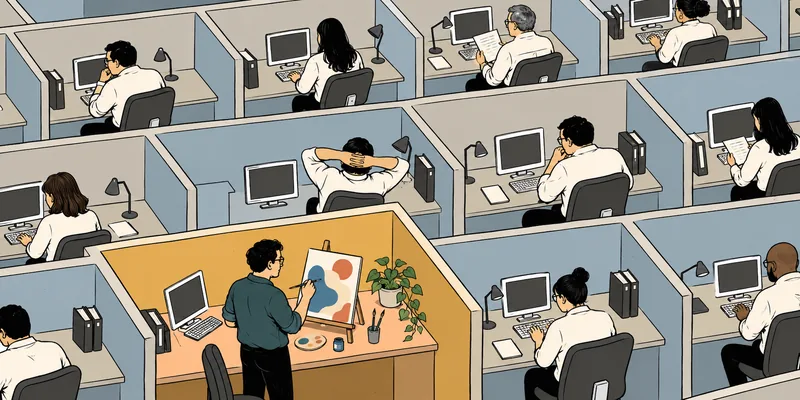
One of the most exhausting parts of modern work is not the work itself. It is the need to appear excited about it. You have to sound energetic in the morning meeting. You have to describe routine assignments as exciting opportunities. You have to react to every new company initiative as if it has changed the future of the industry, even when everyone knows the project is just another project.
There is nothing wrong with enjoying your work. But forced enthusiasm creates a strange kind of dishonesty. It makes ordinary work feel inadequate, as if doing something calmly and consistently is not enough. Sometimes people are not tired because their work is difficult. They are tired because they are constantly performing a version of themselves who loves every minute of it.
You can care about doing a good job without pretending that every task is your passion. You can be responsible without being inspired. You can be grateful without being excited. Those things are not contradictions.
The social media version of work
Social media makes this pressure worse. We see people announcing promotions, launching businesses, sharing impressive projects, or explaining how they turned a passion into a career. Even ordinary work gets presented as a transformation story.
Nobody posts a picture of themselves waiting three days for approval on a document. Nobody writes a motivational caption about correcting the same spreadsheet mistake for an entire afternoon. Those moments do not look impressive, but they make up a large part of working life.
The danger is comparing our unedited working life with someone else's best moments. We see their progress and feel ashamed of our routine. We see their excitement and assume we are doing something wrong because our own work feels ordinary. Maybe we are not failing. Maybe we are just seeing the whole picture while they are showing us one frame.
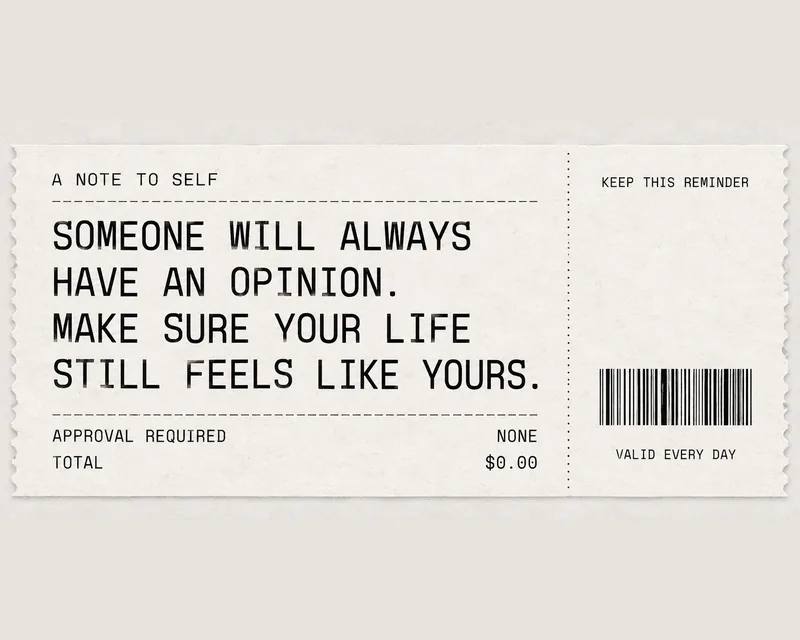
A job does not have to be your identity
The pressure becomes worse when we treat work as an identity. When someone asks, “What do you do?” they are usually asking about your job. But the question can feel much larger than that. It can sound like: What is your value? What have you achieved? What kind of person are you?
This is especially difficult for people who work because they need stability. Many workers are not searching for their passion. They are trying to pay rent, support their parents, provide for their children, pay their bills, and build a slightly safer future. That does not make their work less valuable.
Not everyone has the privilege to leave a stable job and search for something more exciting. Sometimes a person stays because the salary matters. Sometimes they stay because their family depends on them. Sometimes they stay because stability is more important than self-expression. There is dignity in that choice.
A job can pay your bills. It can teach you discipline. It can introduce you to good people. It can give you experience and stability. It can be an important part of your life. But it does not have to explain your entire existence. Your job is one part of your life. It does not need to be the most interesting part.
When boredom becomes burnout
Of course, not all boredom should be accepted. There are days when work is slow and repetitive. That is normal. But there are also days when the boredom feels like numbness. You stop caring whether the work is good or bad. You stop expecting anything from the future. You feel tired before the day even begins.
That may not be boredom anymore. It may be burnout. Boredom is usually a lack of stimulation. Burnout is a loss of energy. Boredom makes you check the clock. Burnout makes you question how long you can continue.
If your work is constantly damaging your health, destroying your confidence, or leaving you with nothing for the rest of your life, the answer should not be to simply accept it. You may need a new challenge, better boundaries, an honest conversation with your manager, or another opportunity. But that decision should come from honesty, not from the belief that every job must feel exciting.
The value of an ordinary day
There is a particular comfort in an ordinary working day. You arrive. You do what needs to be done. You have a few conversations. You solve a few small problems. You make it through the afternoon. Then you go home with enough energy left to be a person.
That last part matters. A job that is constantly exciting may also be constantly demanding. It may follow you home. It may occupy your thoughts at night. It may turn every day into an emergency. Boring work, when it is fair and manageable, can leave space for the rest of your life.
Space to cook dinner. Space to read. Space to talk to someone you love. Space to think about something that has nothing to do with deadlines or performance reviews. Maybe the goal is not to find work that makes every day thrilling. Maybe the goal is to find work that does not consume every part of you.
There is dignity in doing ordinary things well
Life at work is boring. Most of the time, it probably should be. The world depends on people doing ordinary things carefully. Someone checks the quality. Someone maintains the equipment. Someone answers the customer. Someone prepares the records. Someone notices the small problem before it becomes a disaster.
These tasks may not make inspiring stories, but they keep everything moving. A meaningful life does not require every hour to be extraordinary. A meaningful working life may simply require that your work is honest, your effort is respected, and your job leaves enough of you for the people and things you care about after the working day ends.
Work does not have to entertain you or complete you. Sometimes it only has to be work.
A job can be ordinary and still be worth doing well. It can pay for the life you actually care about, then leave enough of you to live it.
Thanks for reading.
Save this story for later, or pass it to someone who might need the perspective.
Did this make you think?

Follows good stories wherever they hide, from construction sites to coffee counters. No specialty means nothing is off the table.