Sometime during my second year at the plant, I learned that the most dangerous question in any workplace is not the loud one asked in meetings and repeated in emails. It is the quiet one exchanged while a machine is running and nobody is listening: why does this have to be so complicated? I have worked long enough to know that question rarely gets a straight answer. It is almost never about the small task that triggered it. It is about the people, the system they built around themselves, and the quiet fear running underneath both - a fear no one wants to name.
Take the calibration form. It is a good place to start because it is the most honest piece of paperwork on the shop floor. The job itself is simple: check the gauge against a standard, record the reading, sign the result, and pull the instrument if it falls outside tolerance. With an hour of training and a morning of practice, anyone with steady hands can do it properly. Nobody needs a long explanation. The needle settles, the number goes in the box, the box gets initialed, and the instrument either returns to work or goes to the bin. That is the whole job, and it is not hard.
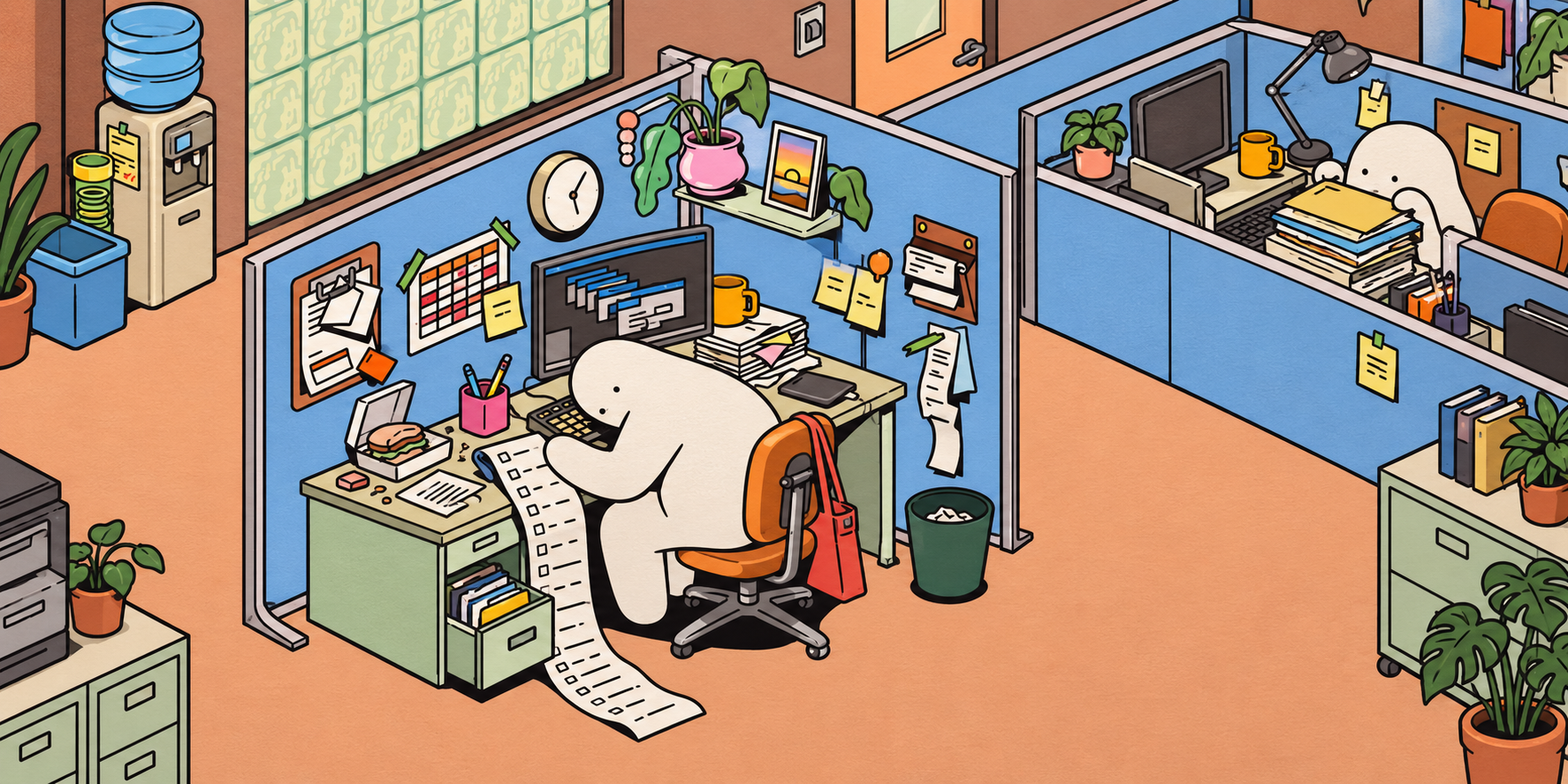
But the whole job is not the whole process. Before the gauge can be checked, someone must request a form. The request must be approved, the approval logged, and the log confirmed by the person at the top of the approval list - who is usually in a meeting. By the time the form arrives, carrying more signatures than a passport, the morning is half gone. The gauge is still idle on the bench, while everyone involved has spent an hour making sure nothing could happen without permission. The cost is not just the lost hour. It is the person who now has to stay late to finish a task that should have been done before lunch, the next shift waiting for an instrument they need, and the small frustration that follows everyone home because a simple job was treated like a national emergency.
The walls people build
I used to think workplace complexity was a design failure, the kind of mistake a reasonable person could fix by pointing it out. I do not think that anymore. The extra steps are not accidents. Each one exists because someone was afraid at some point in the history of that room. They built a small wall to hide behind, and the wall stayed long after the original fear had been forgotten. The signature nobody checks protects the person who insists on it. The email copying six people protects the sender from making a decision alone. The meeting that could have been a message protects everyone from being the person whose judgment later turns out to be wrong. None of this makes the work better. It only makes the work safer for people who do not want to be blamed.
There is a word for this, and it is not bureaucracy, which at least pretends to have a purpose. The word is insulation. Every extra approval, duplicated report, and pointless review becomes a layer of material between a decision and the person who would have to answer for it. The work feels heavy because it is carrying everyone. The machine runs, but nobody wants to run it, because running it means being responsible for it - exactly what everyone has spent years quietly arranging to avoid.
The report that reported on the report
There is a senior at the plant who has been there for twenty-five years. He remembers systems that no longer exist and expects everyone else to remember them too. Every Monday he asks for a summary of the week that just ended. The data is already in the system, already checked, already filed by the people who collected it. But he does not want the data. He wants a new document, assembled by hand, in a format that exists nowhere else, listing the same numbers in a different order with a different cover page. It takes an afternoon to make. Nobody reads it. He files it in a drawer that is already full of identical summaries, and the next Monday he asks for another.
I asked him once, carefully, why the report needed to exist when the numbers were already sitting in the system for anyone to open. He looked at me the way you look at a tool that has started asking questions, and then he said something I have not stopped thinking about since. Because if I ask for it, he said, you do it. And if you just did your job quietly, nobody would know you had one. I understood, then, that the report was never about the numbers. It was a small ceremony of importance, a way of reminding everyone who holds the keys, who gets to decide what an afternoon is worth. The cost of the ceremony was one person's afternoon, every single week, paid in full and never questioned, because questioning it would mean questioning the ceremony itself.
The meeting about the meeting
Then there are the meetings, which deserve their own confession. I once sat in a meeting called to prepare for another meeting. We spent forty minutes deciding what to say in the meeting we were preparing for. At the end, the person running the room asked if anyone had anything to add. Everyone said no. We agreed to meet again the following week and continue preparing. I walked out with less energy than I had brought in - the signature of a meeting that produced nothing except the proof that everyone attended it.
Meetings are where decisions go to become everyone's responsibility, which is another way of saying no one's. Put a choice in a room with twelve people and it will orbit the table until it dissolves, because a decision that belongs to everyone belongs to no one, and the people who could make it are busy waiting for someone else to volunteer. The meeting is not the problem. The meeting is the symptom. The problem is that being decisive has become dangerous, and being safe has become the whole job, and safety, it turns out, requires an audience.
Complicated is how we prove we are busy
There is another kind of complexity that is not fear at all but ornament. It deserves its own name. In every company, some people build an entire process around themselves, and the process becomes proof that their role is necessary. The longer the process, the more indispensable the person. The more people who have to wait on them, the more important they look. I have watched a colleague turn a five-minute approval into a three-day procedure, not out of malice but out of a quiet arithmetic: if the procedure became simple, so would the need for her. The complexity was not a cost she paid. It was the product she sold.
The same arithmetic explains copied emails, endless status threads, and updates about updates. Everyone is performing visibility because visibility has become the only reliable measure of work. Work that cannot be seen has started to feel like work that does not count. So we document, and we circulate, and we reply-all with our small additions, and somewhere underneath the noise the actual job still waits to be done, patient as a gauge sitting on a bench.
The rule that outlived its reason
Every wall has a story, and some of the stories are true. There is a rule at the plant that says no one may change a machine setting without a supervisor watching, and it sounds like the kind of rule a sensible place would have, until you learn when it was born. Fifteen years ago an operator changed a setting without telling anyone, the setting was wrong, and a whole lot of parts came out bad before anybody caught it. The rule made sense that week. The rule was the answer to a real problem, and the answer worked. The operator never did it again. The parts stopped coming out bad. But the supervisor kept being called over, every time, for years, long after the machine had been replaced by a newer one that sets itself, long after the operator had retired, long after the original mistake had become a story told to new people as a warning about the old days.
Now the rule survives as a ceremony nobody remembers the reason for, and everyone pays for it in small installments: the extra wait at the end of every shift, the supervisor pulled away from real work to watch a button get pressed, the young operator who has never once made the old mistake but must still be supervised as if she might. Nobody dares remove the rule, because removing it means being the person who says the old accident will not happen again, and nobody wants to be that person if it ever does. And so the rule that was once an answer to a real problem outlives the problem by fifteen years and becomes a monument to a moment, maintained by everyone and owned by no one.
A procedure is a scar that forgot it was once a wound. The wound healed. The scar stayed, and everyone salutes it as if it were still bleeding.
That is the deeper truth underneath all these walls, and it is more human than I expected. Most complexity is not malice. It is memory. Somebody, somewhere, got hurt once, or was blamed once, or watched someone else take the fall, and built a small protection against the moment repeating, and the protection became habit, and the habit became procedure, and the procedure became the way things are done, and now nobody can say exactly why the first brick was laid, only that the wall has always been there and that taking it down feels like tempting fate. The people maintaining the walls are not lazy or stupid. They are carrying a history they never lived through, and the heaviest thing in any workplace is a fear that outlived its cause.
Not every process is the problem
There is an important difference here, and I do not want to lose it while complaining about paperwork. Not every complicated process is pointless. Some things should be checked twice. A measurement that decides whether a part is safe needs a standard, a record, and someone accountable for the result. A machine that can injure someone should not be operated on trust alone. Quality control is not an insult to people's judgment. It is a way of protecting the people who have to live with the consequences.
The problem begins when a process protects the process instead of protecting the work. A second check can catch a dangerous error. A fifth signature usually only proves that four people were already asked to look away. The question is not whether a workplace has rules. The question is whether each rule still protects something real. If nobody can answer what a step is for, then the step has stopped being care and started becoming armor.
Simplicity is a risk
Here is the part I keep coming back to because nobody says it out loud. Simplicity is not the default state of a workplace. It is a risk that someone has to take. Every time a step is removed, someone has to be willing to stand where the step used to be and accept the responsibility that the step was carrying. The person who says we do not need this signature is saying I will answer for it if it goes wrong. The person who cancels the meeting is saying I will own the decision we would have made in it. The person who skips the report is saying my word is the record. That is why the walls survive. Nobody is volunteering to stand in the open.
And the cost of all that safety is not abstract. I started counting it once, the way you count calories, and it was worse than I expected. A one-hour meeting with twelve people is twelve hours of human life - more than a full working day - spent on something two people could have handled in ten minutes. The report that takes an afternoon is an afternoon that will never come back to anyone. The approval that needs three signatures is three mornings of waiting. Multiply it across a year and you are not talking about inefficiency anymore. You are talking about whole careers, spent inside the walls, doing work that exists only to prove that other work exists.
The person who says just send it to me
That is why the people I admire most at work are not the ones who built the systems or run them. They are the ones who quietly take the walls down, one brick at a time, and offer themselves as the wall. There is an engineer in the next building who is famous for exactly one sentence: just send it to me, I will sign it. She does not ask for three versions. She does not want to see your process. She asks what the thing is, looks at it, and if it is right she signs it on the spot and hands it back, and if it is wrong she tells you exactly what is wrong and does not make you guess. Everyone fights to be on her team, and the fight is not about her technical skill. It is about the fact that she is willing to carry the risk that everyone else has spent their careers arranging not to carry.
I watched her do it once, and it looked like nothing, which is how you know it was everything. A technician brought her a request that needed three signatures before a spare part could be released from the stores: his own, his section head's, and the engineer on duty. The part was a standard seal, the same seal the stores had released a hundred times that year, and the signature of the section head existed, as far as anyone could tell, because a rule written before the seal existed said every release needed two witnesses to the requester's identity. She looked at the form for about four seconds, signed it, and said the other two signatures were not needed because the part was not dangerous and the request was not unusual and the person asking for it had a name badge and a face she could see. The technician blinked. He had been bracing for a lecture about process. What he got instead was his morning back.
Nothing bad happened. The seal was released, the machine was fixed, the shift ended on time, and nobody mentioned the missing signatures again, because nobody had ever needed them except the rule that demanded them. That is the part I keep thinking about. When a step is finally removed and the world does not end, the step is not mourned. It is forgotten within a week, as if it had never existed, which is the truest measure of how unnecessary it was. The walls only look permanent from inside. From the other side they are just furniture, and furniture can be moved.
I have started trying to be that person, in the small ways available to me. When a procedure makes no sense I ask who added that step and what it was for, and I keep asking until someone either remembers a real reason or admits there was never one. When a meeting could be a message I say so, gently, and offer to send the message instead. When a report is redundant I ask what decision it feeds, and if the honest answer is none, I suggest we stop making it for a month and see if anyone notices. Nobody ever notices. That is the secret the whole system is hiding from itself: most of the steps are not load-bearing. They are decoration, and decoration can be removed without the building falling down.
A simpler way is usually visible
The first time I tried to simplify a process, I did not begin by changing a rule. I began by writing down what actually happened. A spare part request moved from the technician to the section head, from the section head to the engineer, and from the engineer back to the storekeeper. Three signatures, two messages, and almost a full day passed before a standard part reached the machine. Nobody had made a difficult decision. We had only moved the same piece of paper around until everyone felt safe enough to let it go.
We changed one thing. The technician still had to record the part number and the reason for the request, but the engineer on duty became the single person responsible for checking and releasing it. One form. One accountable person. One clear answer. The next request took ten minutes instead of a day. Nothing became less careful. We simply stopped asking three people to perform responsibility when one person could actually carry it. The work moved faster, the technician went back to the machine, and nobody had to stay late to compensate for a process that had been designed to protect everyone from being the first person to say yes.
Are we protecting the work, or protecting ourselves from being blamed?
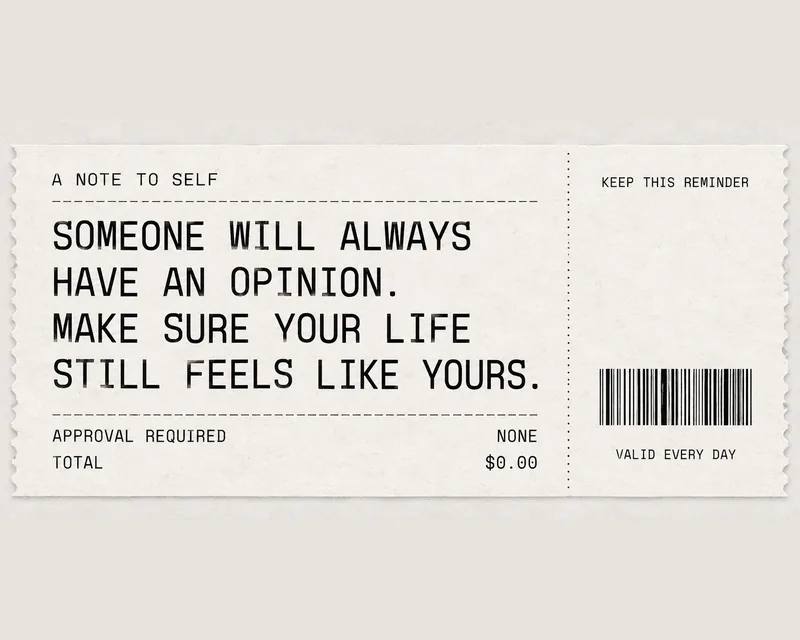
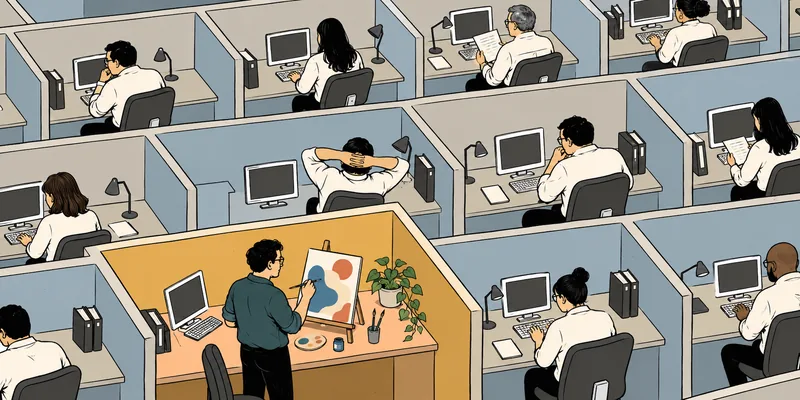
Complicated is how a person makes themselves necessary. Simple is how a person makes themselves free.
I know there are good reasons for some of the layers, and I am not arguing for recklessness. The calibration form exists because a measurement that is wrong can cost more than the time it takes to check it, and the signatures exist because someone has to be able to answer for the record when the record is questioned. Care is not the enemy. Care is the reason the walls exist in the first place. What I am arguing for is the difference between care and armor, between the step that protects the work and the step that protects the person, and for the courage to tell them apart. A workplace that cannot tell the difference will keep paying for walls it no longer needs, and the people inside will keep spending their afternoons maintaining the shelter instead of doing the work.
The gauge is still on the bench where I left it. Tomorrow I will walk the familiar route past the request forms, approval lists, and meeting rooms. I will try to remember what the senior taught me about ceremonies and what the engineer taught me about courage. The report will probably be requested again, and the meetings will probably happen, and some weeks I will lose the argument and spend the afternoon rearranging numbers for a drawer. But I have started to notice the walls, and noticing is the beginning of taking them down. The question was never really why everything is so complicated. The question is who is willing to be the person who makes it simple, and stands there when it counts, and lets the rest of us follow.
Thanks for reading.
Save this story for later, or pass it to someone who might need the perspective.
Did this make you think?

Gets lost on purpose and reports back. Abraham writes about ordinary days, good sandwiches, and whatever he found on the way.