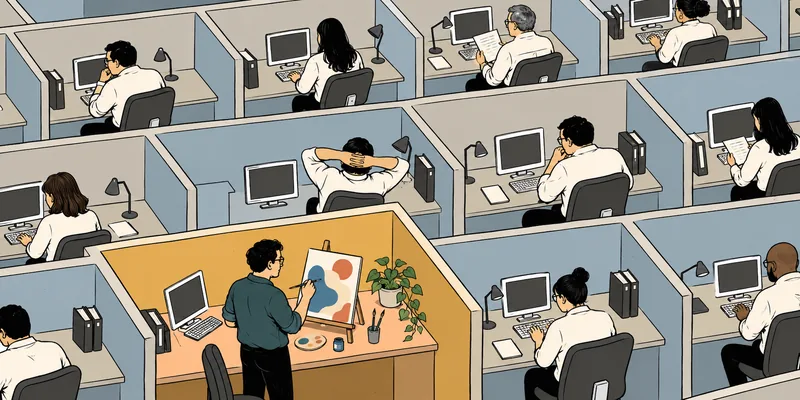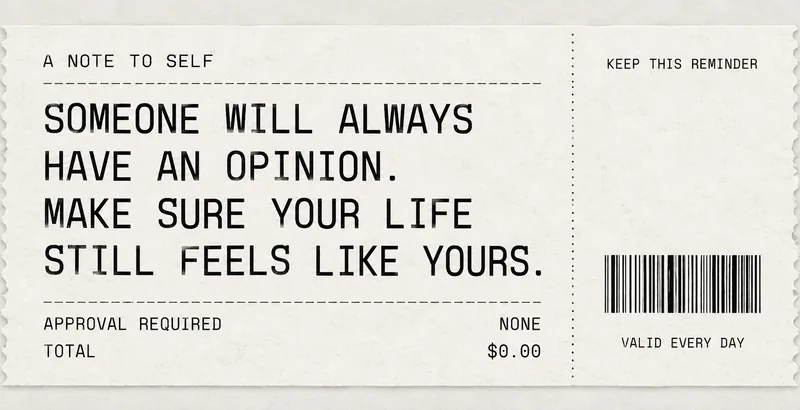
A friend once made me a ticket that looks like a receipt and reads, in order: someone will always have an opinion; make sure your life still feels like yours; approval required, none; total, $0.00; valid every day. For a long time I treated it as a joke. Then I looked at my week and realized most of it had gone to answering people about the work instead of doing the work. The ticket is not a joke. It is instructions.
Someone will always have an opinion
Start with the obvious one, because it is the reason the rest of the ticket exists. You cannot stop people from having opinions. The client has one, the comment section has one, your own colleagues have one, and half of them disagree with each other. Opinions are free, so they arrive constantly. The mistake is deciding that every single one deserves an answer. It does not. Most opinions do not need a reply. They need to be said, and they will be said either way, so let them talk and keep moving.
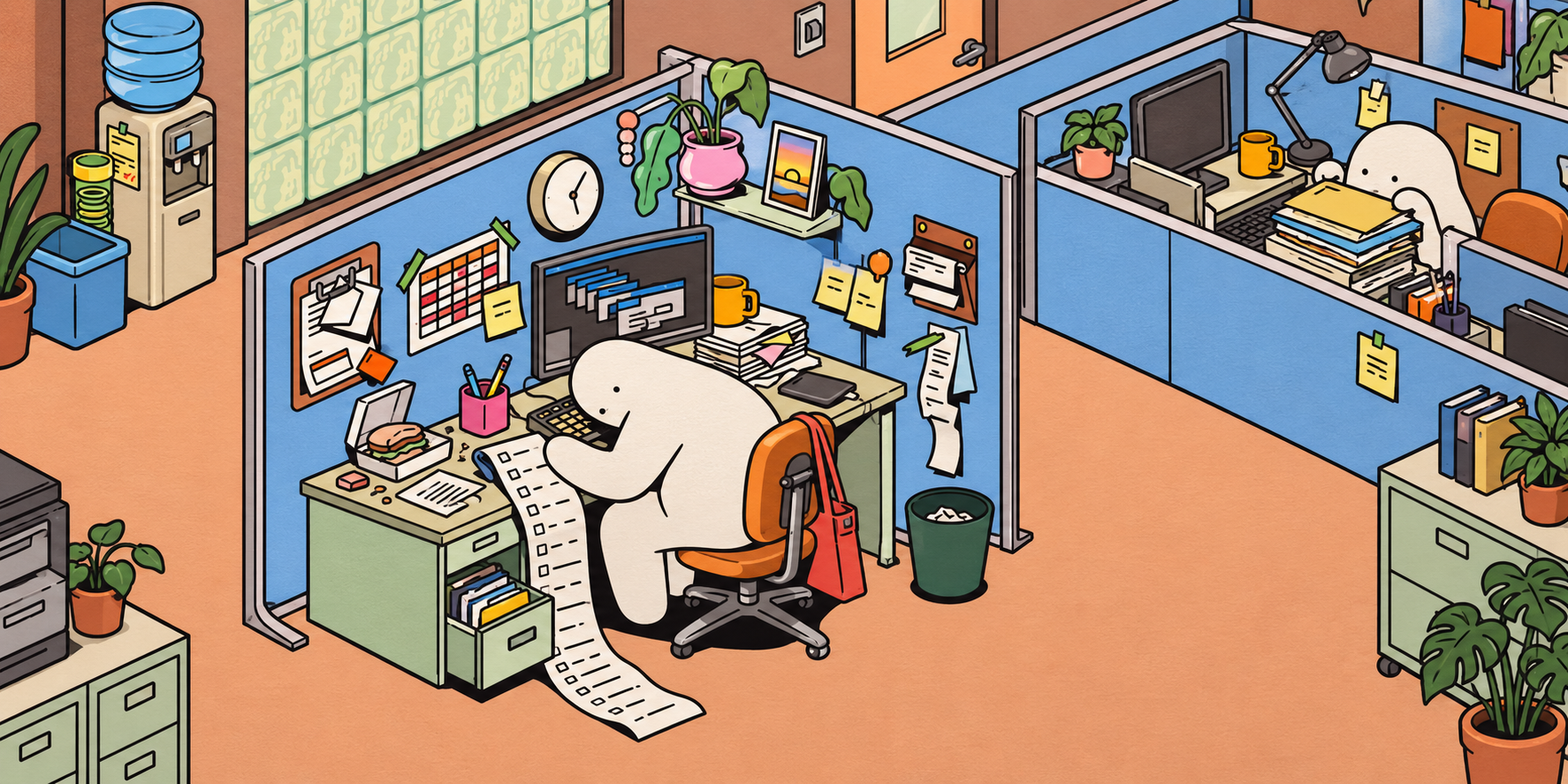
The opinions arrive on a schedule you can set your watch to. The standup where someone explains, kindly and at length, why your approach will not work. The group chat that lights up the moment you share progress, full of people who have thoughts and who have not shipped anything since the chat was created. The review meeting where everyone has a note and nobody has read the whole thing. Each of these is cheaper to answer than to ignore, which is exactly why answering them is a trap. Letting them talk is not ignoring them. It is triage: a quick decision about who pays if the opinion is wrong. Most of the time, nobody pays but you, and the only bill is the time you spent defending.
The talkers are not the builders
I have started to notice a pattern that should be obvious but took me years to see. The people with the strongest opinions about the work rarely have work of their own in a shape anyone can look at. They talk about building the way people talk about a country they have never visited: fluently, confidently, and with no stake in the weather. Talking is a way of standing near building without taking its risks. It costs nothing and it produces nothing, and it fills the same hours that building would have filled.
This is not arrogance on my part, and it is not cruelty. It is just economics. Every minute I spend in the reply is a minute I am not in the build, and the build is the only thing that compounds. Commenters get found by their comments. Builders get found by what they finish, and they get found later, and the later finding is worth more because it is attached to something real. Nobody has ever been hired for the comment they left. People are hired for the thing they made while everyone else was still talking about making things.
Commenters get found by their comments. Builders get found by what they finish.
Make sure your life still feels like yours
That line is the real point, and it took me a while to get it. The problem was never that people talk. The problem is when their talking starts running my days. If a stranger online can change what I do next, or a colleague's hot take can cancel my afternoon, then I am not living my own schedule, I am working theirs. A life feels like yours when the plan comes from the inside: the thing you want to build, the draft you promised yourself, the demo you are curious to see finished. Notice the ticket says note to self. It is addressed to you, because the person most likely to trade your days away is you, not the audience.
I audit my weeks now, the way you audit a budget. At the end of seven days I count two columns: hours spent starting things, and hours spent reacting to things. The second column is always bigger than I want it to be, and the gap is the true price of other people's opinions. One question reveals the whole picture faster than any spreadsheet: did I start anything this week? Not finish. Not polish. Start. If the answer is no, then whatever else happened, the week belonged to someone else, and no amount of clever replies can make it mine again.
Approval required: none. Total: $0.00.
This is the part people skim, and it is the part that pays the bills. Somewhere along the way most of us got used to waiting for permission: for the green light, the sign-off, the moment someone confirms we are allowed to be good at what we do. The ticket cancels all of that. Approval required, none, because nobody is coming to grant it. Total, $0.00, because the approval was never for sale anyway. The only green light that matters in work is whether the thing is worth making. Every anxious pause, every rewrite done for an imaginary judge, is you shopping for someone else's yes. The store is always open and it never has what you actually need, which is your own go-ahead.
Permission-seeking disguises itself as process, which is how it survives. The draft you reread ten times before sending is not careful editing. It is worship of an imaginary reader. The question you ask a fourth person when three have already answered is not diligence. It is stalling until someone gives you the yes you were never going to give yourself. I recognize it now by the feeling: the work is done, and I am polishing it not because it needs polish but because sending it means owning it. The ticket says the sale is final. Approval required, none. You were the buyer and the seller all along, and the transaction closes the moment you stop waiting for a signature that was never on the document.
Valid every day
This last line is what makes it a note about work habits instead of a mood. One good day of not caring does not carry over to the next. The ticket does not expire, so you have to renew it by practicing: publish the draft, ship the demo, send the email anyway, let them talk while you do it, and repeat tomorrow. It gets easier the way everything gets easier, slowly and without ceremony.
The ticket lives where I will see it before the day starts talking, next to the coffee maker, and I read it the way other people read the news: as a reminder of what is actually true. I still relapse. Some days someone says something and I feel the old pull, the urge to explain myself into the ground, and I give in and answer and lose the afternoon. When that happens I try to treat it the way you treat a parking ticket: annoying, mildly expensive, and not a verdict on your character. You paid once for someone else's show. Tomorrow the ticket is valid again, and the work is still there, waiting to be started.
The ticket stays on my desk because I keep forgetting. Someone will always have an opinion, so let them talk. Keep the work that still feels like yours. Approval required, none. Total, $0.00. Valid every day.
Thanks for reading.
Save this story for later, or pass it to someone who might need the perspective.
Did this make you think?

Follows good stories wherever they hide, from construction sites to coffee counters. No specialty means nothing is off the table.