On Friday, someone asked about my weekend plans. I almost told the truth. I wanted to take the train to the end of the line and spend the afternoon walking alone with my camera. Instead, I said, “Nothing much.”
It was a small lie, the kind nobody notices. I told it because the word alone tends to invite a why, and I did not want to defend something I had been looking forward to all week.
The conversation moved on, which was exactly what I wanted. For a moment, I felt relieved. Then I realized what that relief had cost me. I had made myself absent from a conversation I was still sitting inside.
The habit of editing yourself
I have done this for years. Before I answer, I read the room and estimate how much explanation the truth will require. Then I offer the simpler version. I soften my opinions before anyone can disagree with them. I pretend not to care too much about the things I care about. When everybody laughs, I sometimes join a second late, after checking that laughter is the right response.
I used to call this social awareness. Sometimes it is. We all speak differently to a friend, a manager, and a stranger. Living with other people requires a certain amount of adjustment.
The problem begins when adjustment becomes a reflex. At that point, I am no longer choosing how to communicate. I am calculating how much of myself is safe to show, and the calculation is tiring even when nobody asks me to make it.
The tiredness usually arrives later. On the way home, I replay a harmless conversation and examine it like evidence from a trial nobody announced. Was I too honest? Too quiet? Did my answer sound strange? The other person has probably forgotten the exchange, but I am still trying to find the moment when I became difficult to accept.
I was not afraid of being different. I was afraid of having to explain the difference.
Everyone is looking inward
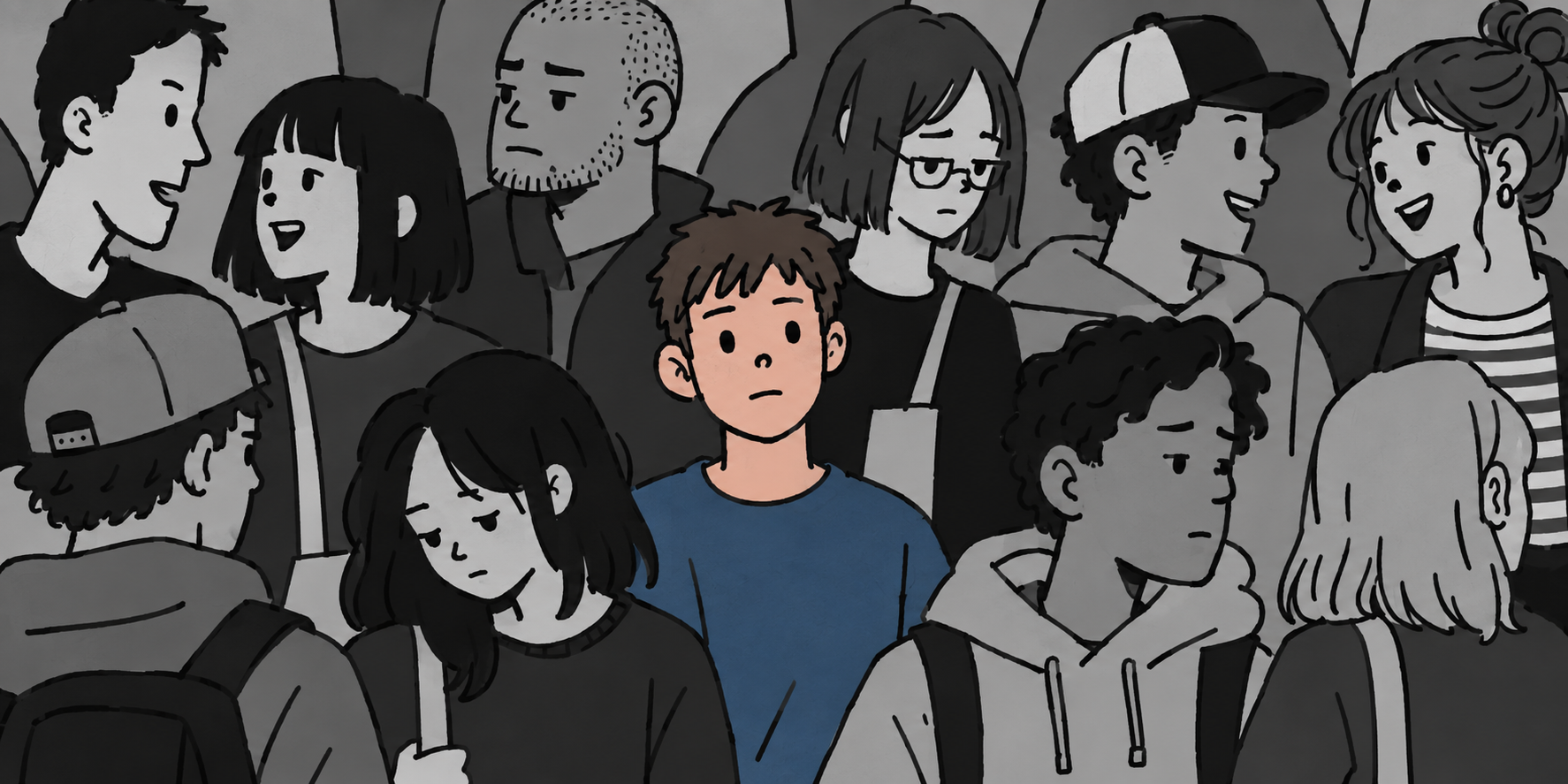
What helps is remembering that most people are not studying me with the attention I imagine. They are thinking about how they sounded, the message they forgot to answer, or the stain on their sleeve. We can sit in the same room, each convinced we are being observed, while almost everyone is looking inward.
Even when someone decides that I am unusual, what has actually happened? A person has had a thought. It is not a verdict, and I do not have to build my life around preventing it.
People often call something strange when they mean it does not match their expectations. Those expectations come from habit, family, work, and the limited number of lives they have seen up close. They may tell me something about that person’s world, but they do not automatically tell me something true about mine.
That does not mean every difference should be protected. Being unusual does not make me wise or correct. I still need to listen when my behavior hurts someone. I still need to apologize, learn, and change. But correcting harmful behavior is not the same as hiding a harmless part of myself.
I should apologize for being cruel. I do not need to apologize for being quiet, curious, emotional, serious, or happy to spend a Saturday alone at the end of a train line.
The right people leave room
That afternoon, the woman from the table found me near the coffee machine. She had heard me say I had no plans, but she had also noticed the camera sticking out of my bag. “Where are you taking that?” she asked.
I told her the real plan. I spoke quickly at first, already preparing to make it sound less strange. She did not ask for an explanation. She only said, “That sounds peaceful.” Then she asked me to send her a photograph if I found something good.
The exchange lasted less than a minute, but it stayed with me. It did not prove that everyone would understand me, and it did not suddenly make me confident. It gave me something smaller and more useful: proof that a truthful answer could survive in an ordinary room.
The right people do not always agree with us. They may ask questions or see the world differently. What they do is leave enough room for us to finish a sentence without making acceptance feel like a performance.
Around them, we stop rehearsing. Silence is not a failure. Difference is not an emergency. We explain ourselves because we want to be known, not because we are defending our right to exist.
The more important worry
Some people will still misunderstand me, and I am learning to let that be an ordinary event. Not every misunderstanding needs a correction. Not every room deserves access to every part of me. Privacy can be a choice without becoming shame.
What I no longer want is a life built for an imaginary audience whose approval keeps moving further away. No matter how carefully I behave, somebody will find me too quiet, too intense, too serious, too sensitive, or simply strange. I cannot edit myself into universal acceptance.
On Monday, someone at the lunch table asked what I had done over the weekend. This time, I told the truth. I took the train to the last stop, walked for three hours, and photographed an empty playground, a blue gate, and an old man feeding birds beside the station.
Nobody laughed. Nobody applauded either. One person nodded. Another asked to see the pictures. Then the conversation moved on, exactly as conversations do.
I had spent years worrying that a truthful answer would change the room. It barely changed the room at all. It changed only the person sitting in my chair. For once, I finished lunch without having to recover from it.
That is where courage begins for me. Not in becoming the loudest person in the room, and not in convincing everyone to understand me. It begins with telling the truth in a voice I can live with.
The world does not need another carefully edited version of me. It needs the person I become when I stop asking whether every part of me is acceptable.
If you have been making yourself smaller to fit into a room, begin with one honest sentence. Share the interest you usually hide. Wear what feels like you. Take the path nobody else would choose. You do not need to become fearless before you begin.
You only need to stop treating your difference as something that needs permission.
Thanks for reading.
Save this story for later, or pass it to someone who might need the perspective.
Did this make you think?
Some weeks an essay, some weeks a field report, some weeks a list nobody asked for. Aiko writes whatever refuses to leave her alone.