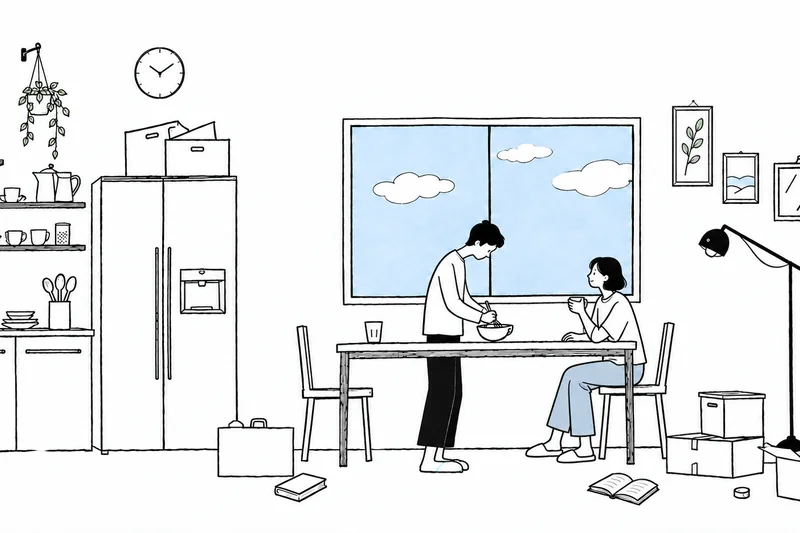
The thing that finally got me was not an emergency. It was a photograph. My mother sent one on an ordinary weekday, the kind she sends without any context, a picture of the kitchen table with a plate of food and a cup of tea and a chair pulled out for nobody. Under it she wrote two words: “your portion.” I laughed, sent a heart back, and then sat there looking at the empty chair for much longer than the message deserved. That was the moment I understood that everyone at home is getting older, and that I have been getting busier at exactly the same speed, as if the two things were racing and only one of them knew it.
Nobody announces this. There is no evening when your father sits you down and tells you that he has started walking a little slower, or that your mother now reads every message twice before she answers it. Aging arrives in small, boring details, and boring details are the easiest things in the world to miss. A chair takes one extra second to leave. A story gets told twice, and the second time it is slightly different. A name is mentioned and then explained to you, in case you have forgotten who that person is, which quietly means that they have forgotten you were once told.
I have been busy for years, and I am not going to pretend that busy is a lie. The work is real. The deadlines are real. The commute eats two hours a day and the rest of the week is spent recovering from the commute. There are days when I finish everything I was supposed to finish and still feel behind, and on those days the last thing I want is to drive across the city and sit in a room and answer questions about my life.
That is the honest part. The dishonest part is what I do with it. I take a true thing, which is that I am tired, and I turn it into a permanent explanation for not being present. Busy is not only a schedule. It is a shelter. It is the one excuse that nobody argues with, because everyone is standing inside the same shelter, holding the same phone, waiting for the same quiet week that never actually arrives.
The week that never comes
I keep a version of the calendar in my head, and in that version there is always a quiet week just ahead. It sits right after this project, or after the semester, or after the deadline that has been moved twice. In the quiet week I will drive home on a Saturday morning instead of a Saturday night. I will stay for lunch and then stay for dinner. I will ask the questions I keep meaning to ask and actually listen to the answers instead of waiting for my turn to talk.
The quiet week has never arrived. It cannot arrive, because a quiet week is not a thing that happens to a person who is busy. It is a thing a person has to make, and making it means saying no to something else, and saying no is the part I have been avoiding for years. It is much easier to believe that the week is coming than to admit that I am the one who keeps moving it.
What I have noticed is that busy people rarely cancel. Canceling is rude, and it leaves a mark, and it forces a conversation. Postponing is softer. Postponing keeps the relationship technically alive while costing almost nothing in the moment. “Not this weekend, but soon.” “Next month, once things calm down.” Every one of those sentences is a small loan taken out against a future that I have not actually scheduled. The interest is invisible, and it compounds quietly, and one day the balance is a year.
The arithmetic nobody wants to do
I did the math once, on a night when I could not sleep, and I do not recommend it casually. If I see my parents four times a year, and they are in their sixties, and I am in my thirties, then even a generous run of decades gives me a number of visits I can count on my hands a few times over. It sounds like plenty until you subtract the visits that will be lost to work trips, to being sick, to being tired, to the weddings and funerals that will pull me somewhere else, to the weekends when I will simply not feel like driving.
The number that survives all of that subtraction is smaller than any number I would have guessed before I did the math. I am not writing this to be morbid. I am writing it because the arithmetic is not the same thing as guilt. Guilt is a feeling that changes nothing and asks for nothing except a little self-punishment. Arithmetic is just information, and information is allowed to change a decision.
There is a second calculation, and it is the one that actually scares me. It is not how many times I will see them. It is who they will be when I do. The parents I visit in ten years will not be the parents I know now. They will be slower, and more careful, and more tired, and possibly less sure of things they were once certain about. Every year I postpone is a year I spend with a version of them that I will never get back, and I have been treating those versions as if they were interchangeable.
Every year I postpone is a year I spend with a version of them that I will never get back.
They still talk to me like the person I was
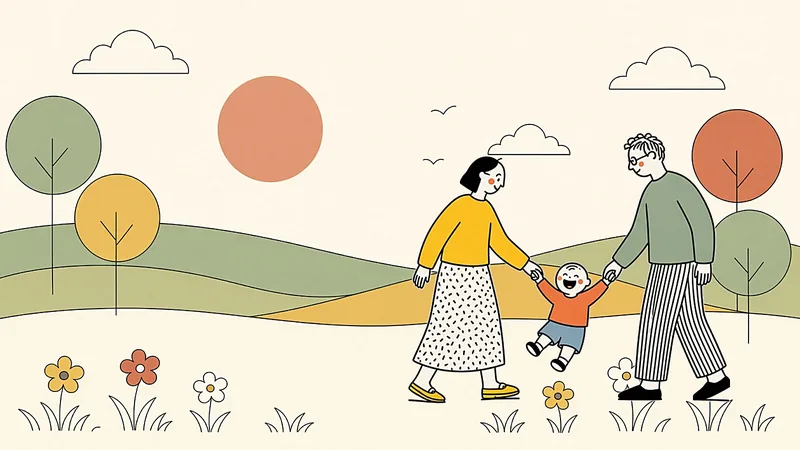
At home I am still, in some stubborn way, fifteen years old. My mother asks whether I have eaten. My father asks whether the car is making that noise again. Someone reminds me to bring a jacket even though I am an adult with a job and a bank account and opinions about interest rates. It used to irritate me, this refusal to update the file, and I complained about it to friends who had the same complaint about their own families.
I have changed my mind about it. Being treated as the child I was is annoying and it is also the last place on earth where I am known without a resume. At work I am a set of skills and a response time. In a group chat I am a name with a typing indicator. At home I am the person who once fell off a bicycle and cried for an hour, and that version of me is still walking around in their heads, and they are fond of him. There is no other room in my life where I get to be loved for something I no longer am.
Which is exactly why I avoid certain conversations. I do not want to talk about their health. I do not want to talk about retirement, or the house, or what happens to it, or the documents that someone will eventually need to find. I change the subject, and I tell myself I am protecting the mood, and what I am really protecting is my own comfort. The mood stays warm. The information stays where it was, which is in a drawer that only they know about.
There is a particular kind of selfishness that looks like kindness. I have been very good at it. I bring fruit, I fix the wifi, I make everyone laugh at dinner, and then I leave before anyone can ask me a serious question. A visit where nothing difficult is discussed feels like a success. It is not a success. It is a pleasant postponement with better food.
The visits that are only half visits
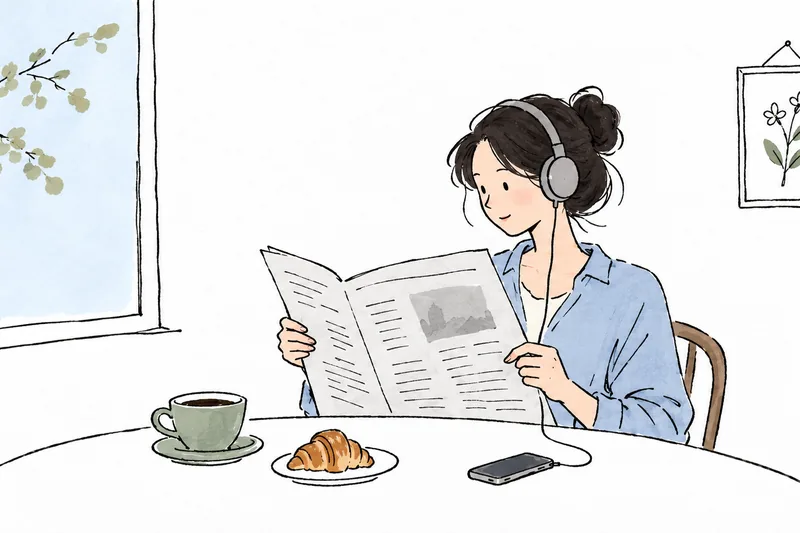
For a long time I thought being present was a matter of location. If I was in the house, I was there. I would arrive with my laptop because there was one thing I had to finish, and I would sit at the same table as everyone else while my attention lived somewhere else entirely. Someone would say my name, and I would answer from a different room in my head, and the conversation would quietly move on without me.
My father noticed before I did. He has a habit of waiting. He will start a sentence, see that I am not actually there, and let it go, and then bring it up again later when I have closed the laptop. That second version of the sentence is always the real one. It took me an embarrassingly long time to understand that the first attempt was a test, and that I had been failing it politely for years.
A half visit is worse than no visit, in a way. No visit is honest. A half visit takes the slot, uses the afternoon, and still leaves everyone slightly hungry, because the person was in the room and not in the room at the same time. It is a meeting where one attendee is on their phone. Everyone can see it, and nobody says it, because saying it would make the visit worse, and so the visit stays pleasant and stays empty.
What being busy actually buys me
I have started asking myself what all this busyness is really purchasing, and the answer is less flattering than I expected. Work buys me the feeling of being needed in a way that is loud and measurable. A message arrives, I answer it, the message goes away. A task appears, I finish it, and someone notices. The feedback loop is fast, and fast feedback is addictive.
Home does not work like that. Nobody at home sends me a task with a deadline. Nobody measures whether I showed up. The reward for visiting is not a completed ticket. It is a slower, quieter feeling that takes a day to notice and cannot be checked off a list. When I am tired and shallow, I choose the loud reward every time, and I call it having a lot going on.
There is also the uncomfortable fact that the work will replace me. I know this because I have watched it happen to other people. Someone leaves, and within a month the projects have new names on them and the group chat has adjusted, and the only thing that really changed is that the chair is occupied by somebody else. That is not a tragedy. That is just how work is built. It is designed to survive without any single person.
A family is not designed that way. It notices the empty chair for a long time. It keeps the plate out. It sends a photograph of your portion with two words underneath, because it has no other way of saying come home, and because it is too polite to say that plainly, and because I have trained everyone to accept a heart emoji instead of an answer.
The repair is small and unglamorous
The fix is not quitting my job, and it is not moving back into my old room, and I am suspicious of any essay that pretends the answer is that dramatic. Most of the repair is small and administrative. It is a phone call on a Tuesday for no reason. It is a Sunday where the laptop stays closed in the bag and the bag stays in the car. It is asking the boring question instead of the funny one, and then staying quiet long enough for the boring answer to arrive.
It is also doing the unglamorous work of knowing things. Which doctor they see. Which medicine is in the drawer and when it runs out. Which appointment is coming up. Which document lives in which folder, and who else has a copy. This is the part nobody romanticizes, and it is the part that makes the difference between being a visitor and being family. A visitor brings fruit. Family knows where the paperwork is.
The other change is making the visit an appointment instead of a mood. A mood depends on how I feel that weekend, and how I feel that weekend depends on traffic and sleep and a hundred things I do not control. An appointment is just a date and a time, written somewhere, treated like any other commitment. It is strange that I need to schedule my own parents. It is also the only thing that has actually worked.
None of this is heroic. It does not make a good story, and it does not photograph well. A Tuesday phone call about nothing is not content. But I have slowly come around to the idea that the ordinary, repeated, unremarkable version of showing up is the only version that survives contact with a real calendar. The grand gesture is what you do when you have already been absent for a while and want to feel better about it.
The honest ending
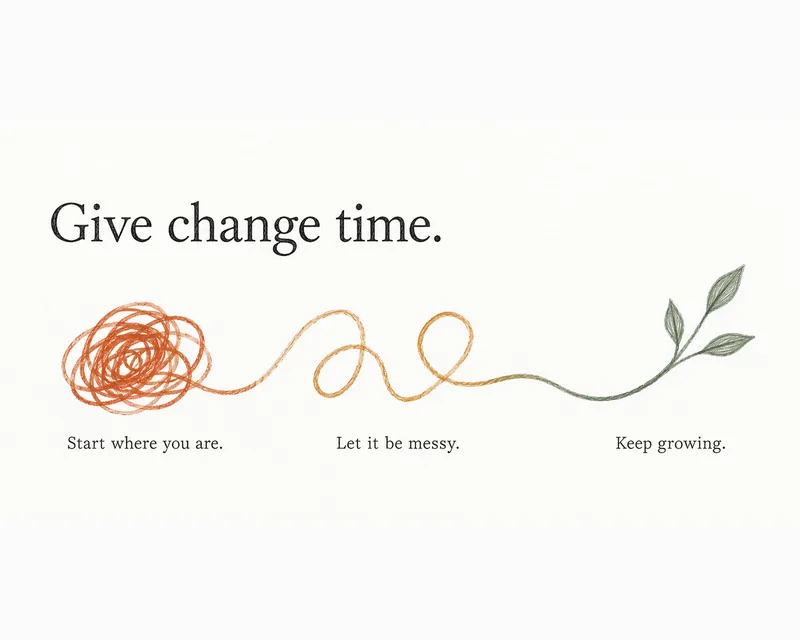
I am not going to promise that I will become a different person, because I have made that promise before, usually in December, usually to myself, usually in the same week I bought a planner I did not use. The busyness is not going away. The projects will keep arriving and the commute will keep eating its two hours. What I can change is what I tell myself about it.
The story I used to tell was that I am busy now and present later. It was a good story because it had no date in it. The story I am trying to tell instead is smaller and more embarrassing: I am busy, and I am also choosing, every single week, what the busyness gets to push out. Most weeks I will still choose wrong. The point is to notice that it is a choice, and to make it out loud instead of letting the calendar make it for me.
So the photograph is still on my phone. My mother has sent several more since, each one a table and a plate and a chair, each one a small, patient, slightly funny way of asking whether I am coming. I have started answering with a date instead of a heart. It is not much. It is, I think, the whole thing.
And one day I will sit in that chair, and the plate will be mine, and the person across the table will be a little older than the one I keep in my head. I would rather meet that version of them while I still have the chance to be surprised by how much has changed, than arrive years later and find out that I was the only one who had not been keeping track.
Thanks for reading.
Save this story for later, or pass it to someone who might need the perspective.
Did this make you think?

Some weeks an essay, some weeks a field report, some weeks a list nobody asked for. Aiko writes whatever refuses to leave her alone.